
Add senior software engineering capacity without carrying the full decision risk alone
Coorva helps CTOs, VPs of Engineering, CIOs, and technical leaders add senior capacity to critical software, data, and infrastructure environments.
The client retains ownership of architecture, product, and priorities. Coorva provides the validation, integration, operational follow-up, and continuity mechanisms appropriate to the engagement.
Conducted by a senior engineer. No sales presentation, artificial urgency, or obligation to proceed.
The Risk-First model
- Peer-level validation
- Contextual matching
- Structured onboarding
- Active service delivery
- Continuity mechanisms
The objective is not to eliminate technical risk. It is to make the capacity decision more controlled, visible, and adjustable.
Experience in critical software environments
Coorva has supported more than 250 software engineering positions across 30 client accounts in healthcare, energy, smart infrastructure, and adjacent technology environments.









Verified client reviews
Read verified client feedback about working with Coorva.
The capacity problem
When the system is critical, adding people is not enough
Traditional staffing, marketplaces, and rapid sourcing can improve access to available talent.
They often leave the client responsible for:
- contextual technical validation
- the cost of a poor selection
- onboarding
- supervision
- continuity
- knowledge loss
- escalation
- the internal political cost if the decision fails
The problem is not simply finding more developers. It is adding senior capacity without increasing technical, operational, or regulatory exposure.
Value Business Cases
Start by testing whether the decision is justified
A Value Business Case helps determine whether an engineering-capacity decision is warranted by a material business, operational, or technical problem.
It is not a service package or a promise of return. Each case frames the decision, the evidence to gather, and the conditions that would need to hold.
Unlock the roadmap through technical seniority and business context
Evaluate whether one senior software engineer can generate net capacity after onboarding and assume material roadmap work without creating disproportionate supervision or rework.
Primary decision
Whether to add one context-aware senior engineer to an existing team.
Likely engagement model
Risk-First Senior Engineer
Validate Computer Vision before scaling energy-infrastructure inspection automation
Determine whether available images, devices, models, and data are reliable enough to support inspection decisions and justify a larger automation investment.
Primary decision
Whether the evidence supports further automation, hardware, infrastructure, or integration investment.
Likely engagement model
Managed Capacity or Managed Squad, depending on scope and dependencies
Scale healthcare engineering and QA without losing technical control
Evaluate whether external engineering and QA capacity can support a critical roadmap while preserving technical control, security boundaries, operational visibility, and continuity.
Primary decision
Whether to add and actively manage several engineering or QA capabilities.
Likely engagement model
Risk-First Managed Capacity
Restore operational continuity and technology control under critical provider dependency
Evaluate whether a critical dependency on an external provider justifies a controlled transition that preserves service while improving autonomy, transferability, and future choice.
Primary decision
Whether to maintain, renegotiate, diversify, internalize, or transition away from a critical provider dependency.
Likely engagement model
Managed Capacity or Managed Squad, depending on the transition
Next question: What expertise does this situation require?
Capabilities
What expertise does the situation require?
Technical leadership, product engineering, embedded seniority, AI, data, and infrastructure may require very different interventions.
Capabilities define what expertise is required. Engagement Models define how that expertise is integrated and managed.
Engagement Models
How should that capability be integrated and managed?
The Engagement Model defines the unit of intervention, the depth of operational follow-up, and the accountability Coorva assumes around the selected capability.
All three models maintain the same standard of seniority and peer-level technical validation — the difference is not quality, but the unit of intervention.
Risk-First Senior Engineer
A validated senior engineer integrated into an existing team
A validated senior engineer integrated into an existing team whose daily technical coordination remains with the client.
Best suited when
- a clearly defined role exists
- the client has internal technical leadership
- daily coordination will be performed by the client
- the primary need is one individual capability
- the engineer will join an existing team
- the client wants to validate fit before expanding
Investment model
Integrated rate per engineer.
Risk-First Managed Capacity
Recurring senior capacity with consolidated visibility and continuity
One or more technical roles combined with recurring follow-up, continuity, consolidated visibility, and engagement management.
Best suited when
- one or more critical roles exist
- the need is recurring
- the account is adding new capabilities
- multiple stakeholders or work streams exist
- continuity of context matters
- greater consolidated visibility is required
- the client wants to reduce follow-up burden
- the client retains technical direction and product coordination
- there is not yet one unified initiative requiring squad-level coordination
Investment model
Monthly managed-capacity fee.
Risk-First Managed Squad
Coordinated senior capabilities around one critical initiative
A coordinated configuration of senior capabilities around a defined critical initiative.
Best suited when
- a clearly delimited initiative exists
- several interdependent roles are required
- participants work toward one shared objective
- fragmentation or rework would be costly
- relevant milestones, dependencies, or handoffs exist
- integrated coordination is required
- context continuity is part of the value
- an internal technical sponsor exists
- criticality justifies deeper follow-up
Investment model
Managed squad fee.
Compare
How the three models differ
| Attribute | Senior Engineer | Managed Capacity | Managed Squad |
|---|---|---|---|
| Unit of intervention | Individual capacity | Managed capacity system | Coordinated critical initiative |
| Typical situation | One clear role | One or more recurring critical roles | Several interdependent roles around one initiative |
| Daily coordination | Client | Client, with consolidated Coorva follow-up | Coorva coordinates the engagement |
| Technical ownership | Client | Client | Client |
| Coorva accountability | Validation, integration, and early fit | Health, continuity, and visibility of the capacity | Coordination, dependencies, milestones, and continuity |
| Service delivery | Base | Active and recurring | Structured |
| Checkpoints | Initial | Periodic | Milestone-based |
| Risk reviews | When relevant signals emerge | According to criticality | Integrated into initiative follow-up |
| Documentation | Basic | Consolidated according to context | Defined according to the initiative |
| Typical path | Land | Land / Expand | Expand / Deep Integration |
| Investment | Integrated rate per engineer | Monthly managed-capacity fee | Managed squad fee |
- Unit of intervention
- Individual capacity
- Typical situation
- One clear role
- Daily coordination
- Client
- Technical ownership
- Client
- Coorva accountability
- Validation, integration, and early fit
- Service delivery
- Base
- Checkpoints
- Initial
- Risk reviews
- When relevant signals emerge
- Documentation
- Basic
- Typical path
- Land
- Investment
- Integrated rate per engineer
- Unit of intervention
- Managed capacity system
- Typical situation
- One or more recurring critical roles
- Daily coordination
- Client, with consolidated Coorva follow-up
- Technical ownership
- Client
- Coorva accountability
- Health, continuity, and visibility of the capacity
- Service delivery
- Active and recurring
- Checkpoints
- Periodic
- Risk reviews
- According to criticality
- Documentation
- Consolidated according to context
- Typical path
- Land / Expand
- Investment
- Monthly managed-capacity fee
- Unit of intervention
- Coordinated critical initiative
- Typical situation
- Several interdependent roles around one initiative
- Daily coordination
- Coorva coordinates the engagement
- Technical ownership
- Client
- Coorva accountability
- Coordination, dependencies, milestones, and continuity
- Service delivery
- Structured
- Checkpoints
- Milestone-based
- Risk reviews
- Integrated into initiative follow-up
- Documentation
- Defined according to the initiative
- Typical path
- Expand / Deep Integration
- Investment
- Managed squad fee
Technical use cases
Or start from the situation your team is in right now
Value Business Cases frame the business decision. Technical use cases describe the concrete situation and the pressure behind it.
Identify the situation, the affected system or initiative, the risk, and the outcome required. Coorva then configures a proportional intervention.
Roadmap blocked while senior hiring cannot respond
Critical roles remain open, the internal team is overloaded, and roadmap commitments cannot wait for a full internal hiring cycle.
Decision
How can the organization add seniority quickly without lowering the technical standard or increasing the CTO’s evaluation and supervision burden?
Expected result
- clearly defined role and responsibilities
- senior capacity integrated into the team
- structured onboarding
Possible engagement models
Risk-First Senior Engineer · Risk-First Managed Capacity
Core system, migration, or infrastructure under pressure
The product is affected by technical debt, fragility, scalability limitations, data-quality problems, observability gaps, or a migration that cannot be postponed.
Decision
How can the organization add specialized capacity without fragmenting execution or adding more risk to a sensitive system?
Expected result
- clearer responsibilities
- greater visibility into dependencies
- earlier identification of risk
Possible engagement models
Risk-First Managed Capacity · Risk-First Managed Squad
New contract, enterprise commitment, or regulatory pressure
A customer win, audit, contractual commitment, or compliance requirement increases the cost of delays, errors, missing traceability, or operational instability.
Decision
How can the organization accelerate a critical initiative without compromising reliability, continuity, security, or credibility with the customer?
Expected result
- clearer ownership
- follow-up proportionate to criticality
- documented restrictions
Possible engagement models
Risk-First Managed Capacity · Risk-First Managed Squad
The offer
Senior capacity inside a system of validation, integration, and follow-up
Your organization keeps technical control. Coorva strengthens the capacity and operating mechanisms around the engagement.
Coorva introduces senior software engineering capacity through a Risk-First system that combines:
- engineers evaluating engineers
- contextual matching
- structured onboarding
- active service delivery
- early checkpoints
- continuity mechanisms
- options to maintain, adjust, replace, expand, internalize, or exit
Outcome
What the engagement is designed to improve
Selection clarity
Greater confidence that the role, seniority, autonomy, and operating context have been defined before deployment.
Integration visibility
A structured onboarding process with responsibilities, access, tooling, context, and early-fit criteria.
Operational follow-up
Visibility into integration, performance, dependencies, continuity, and emerging friction after capacity enters the environment.
Decision flexibility
Evidence to maintain, adjust, replace, expand, internalize, or conclude the engagement.
Risk-First Delivery Protocol
A controlled path from context definition to an informed continuation decision
Context & Risk Validation
Coorva and the client agree on the buying situation, affected initiative or system, primary risk, required capabilities, seniority and autonomy, ownership, security and compliance restrictions, permitted tools, success criteria, and continuation and exit conditions.
Capacity Selection & Deployment
Coorva selects and integrates the agreed capacity through peer-level technical evaluation, contextual matching, communication and autonomy validation, structured onboarding, access and responsibility definition, service-delivery activation, and initial checkpoints.
Operational Fit Review
The review considers team integration, priority clarity, initial performance, context transfer, coordination friction, dependencies, technical and operational concerns, and whether the level of support should be adjusted.
Continue, Adjust, Expand or Exit
Possible decisions include maintaining the current model, adjusting profile or composition, adding capabilities, moving to Managed Capacity, configuring a Managed Squad, internalizing talent through Buy-Out, reducing scope, or concluding the engagement. Expansion is not automatic.
Industries
Designed for software with operational consequences
Smart & Critical Infrastructure Software
Senior capacity across software and physical operations, where reliability, sensor data, and deployments carry consequences outside the application layer.
Energy Software
Senior capacity for grid platforms, forecasting, and operational workflows connected to physical infrastructure and utility relationships.
Healthcare Technology
Senior capacity for regulated products, sensitive data, and critical workflows where poor engineering decisions are difficult to reverse.
Financial Infrastructure — selective engagements
Coorva selectively supports financial-infrastructure environments where transaction integrity, sensitive data, security, reliability, or operational continuity materially increase the cost of a poor capacity decision.
Evidence
Senior capacity that remains effective after deployment
Based on Coorva operating data across 30 client accounts. Definitions, cohorts, and measurement periods should be approved before publication and made available on request.
“They have integrated into our team like any other employee.”
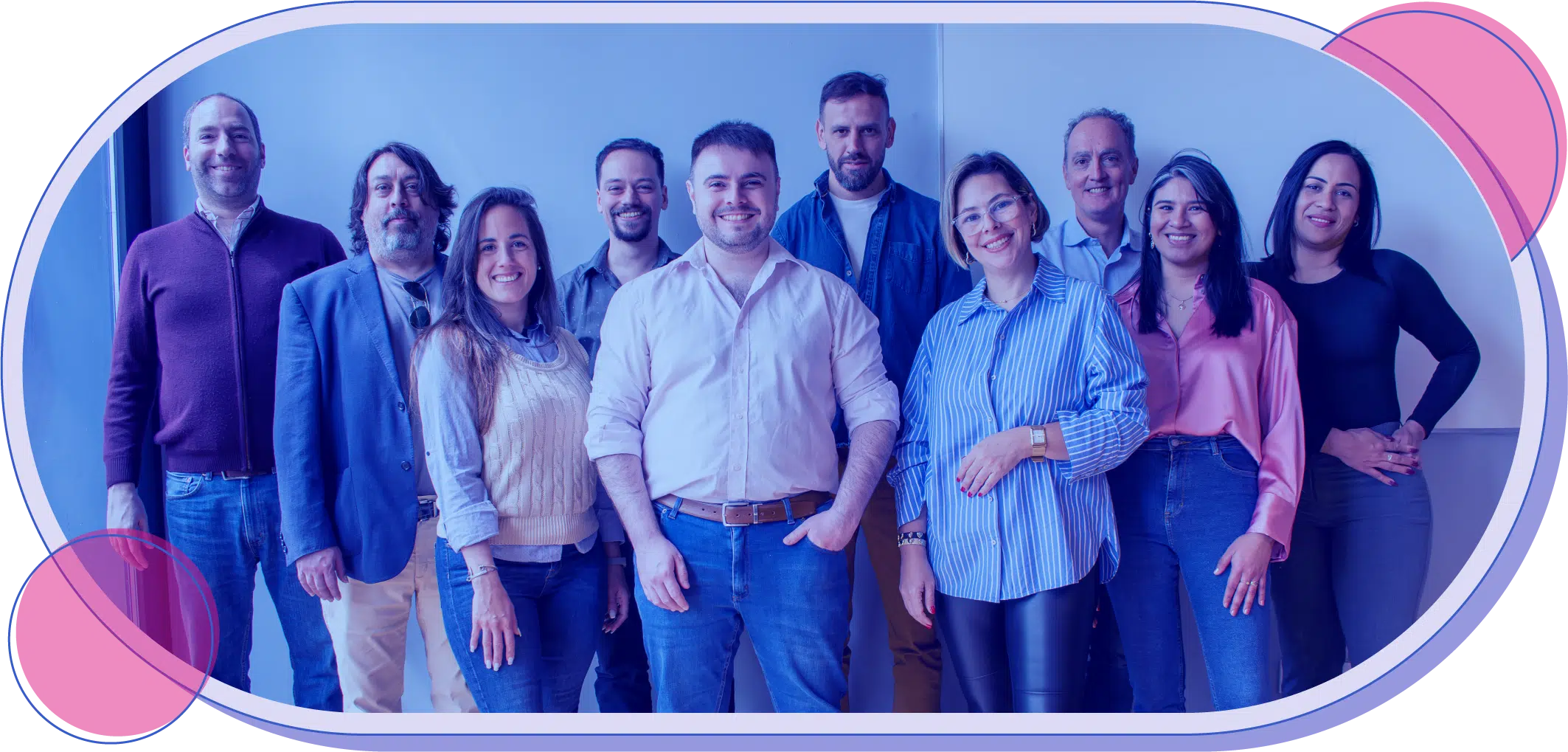
The team behind the model
The people behind the operating model
Risk-First Software Engineering depends on technical judgment, operational follow-through, and people who remain involved after capacity is deployed.
Coorva brings together engineering, service delivery, recruiting, operations, and leadership to support the client relationship throughout the engagement.
Investment
Monthly investment based on capacity, complexity, and operational support
The primary communication unit is integrated monthly investment. The economic difference between engagement models reflects the unit of intervention and Coorva’s operational accountability—not a different quality standard.
Required capacity
Roles, seniority, specialization, dedication, and composition.
Context complexity
Criticality, dependencies, security, data sensitivity, compliance, and stakeholders.
Level of operational support
Service delivery, coordination, risk reviews, documentation, and continuity.
Start with the situation, not a predefined package
A focused conversation with a senior engineer to define the situation, the level of operational accountability required, and the appropriate next step.
The Risk Review defines
- the buying situation
- the affected system or initiative
- the primary risk
- required capabilities
- internal ownership
- security and compliance constraints
- success criteria
- the appropriate engagement model
- the information required to confirm monthly investment
Conducted by a senior engineer. No sales presentation, artificial urgency, or obligation to proceed.